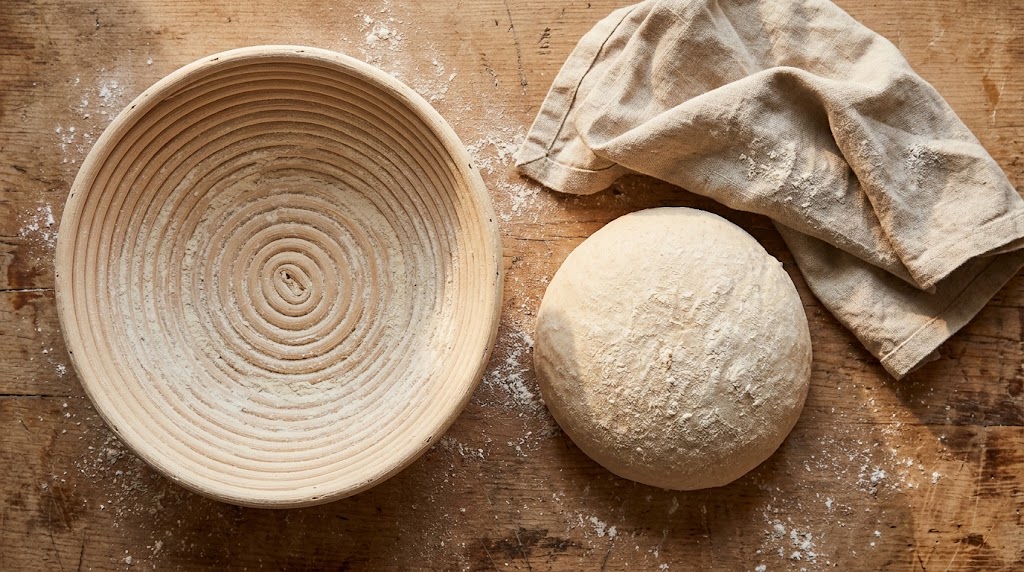
The first loaf I proofed in a banneton looked like it had been designed by someone who understood bread. Tall, round, with spiral flour lines running from the centre outward. The loaf before it, proofed in a salad bowl with a tea towel, was flat on one side where it stuck and slightly lopsided from my attempts to pry it out. Same dough. Same recipe. Different results entirely, and the difference was a $12 basket.
Bannetons (also called brotforms or proofing baskets) support sourdough during its final rise, the stage where shaped dough ferments for anywhere from one to eighteen hours before baking. They hold the shape, wick surface moisture, and leave those distinctive ring patterns on the crust. Not essential for edible bread, but they make reliably good-looking bread much easier.
Rattan (cane) bannetons: the traditional choice
Natural rattan is what bakeries have used for generations. The coiled cane wicks moisture from the dough surface, creating a slight skin that helps the loaf hold its shape during the oven transfer and produces a crisper crust. The spiral pattern of the coil leaves flour lines on the dough that survive baking and become part of the loaf's character.
The Bread Bosses 9-inch round banneton is one of the better-known options. It is made from Indonesian rattan, sized for 500g to 800g dough balls, and comes with a cloth liner if you prefer a smooth surface without spiral marks. The build quality is consistent, with tight coils and no loose strands poking into dough.
Rattan's main drawback is maintenance. It must dry completely between uses or it grows mold. Never wash it with soap; a stiff brush and air drying are the recommended cleaning method. Over time, flour builds up in the coils, which is actually desirable because the seasoned layer prevents sticking better than a fresh basket.
Wood pulp (composite) bannetons
Wood pulp bannetons are moulded from compressed wood fibre into the same round or oval shapes as rattan. They are lighter, cheaper, and often smoother on the inside. Some versions have a spiral pattern moulded in; others are completely smooth.
The Vollum wood pulp banneton is a solid example. It is lighter than rattan, easier to store, and produces clean release without much flour. The moulded pattern gives a more uniform ring mark than natural rattan, which some bakers prefer and others find too perfect-looking.
Wood pulp does not wick moisture as effectively as rattan. In humid environments or with high-hydration doughs (75% and above), the dough is more likely to stick. Flouring generously before loading the dough helps, but it is an extra variable to manage.
Round vs oval: choosing a shape
Round bannetons produce boules. Oval bannetons produce batards. The choice is partly aesthetic and partly practical.
Boules are simpler to shape, fit standard Dutch ovens, and are forgiving for beginners. Batards look more like traditional bakery loaves, slice into sandwich-friendly pieces, and fit better on a baking stone. If you own a round Dutch oven, start with a round banneton. If you bake on a stone or in an oval vessel, an oval banneton makes more sense.
The 9-inch round banneton is the most versatile starting point. It handles the 500g to 800g dough range that most home recipes produce. For larger bakes, a 10-inch round or a 12-inch oval covers loaves up to 1kg of flour.
With or without a cloth liner
Most bannetons come with a removable cloth liner. Using the liner gives a smooth surface without spiral marks and makes cleaning easier. Going bare gives the classic ring pattern and slightly better moisture wicking.
For white flour doughs, going bare works well. The flour sticks to the rattan and creates a non-stick layer over time. For whole grain or seeded doughs, a cloth liner prevents seeds and bran from jamming into the rattan coils, which is nearly impossible to clean out once it happens.
Sizing the banneton to your recipe
- 8-inch round: Loaves made with 400g to 500g flour. Good for smaller households or when baking two loaves from a single batch.
- 9-inch round: The standard. Fits 500g to 800g flour. This is what most recipes assume.
- 10-inch round or oval: Larger loaves, 800g to 1,100g flour. Useful if you bake less frequently and want a bigger loaf.
An undersized banneton lets dough overflow the rim during proofing, which ruins the shape. An oversized one lets dough spread sideways instead of rising upward, giving a flat loaf. Matching the banneton to your typical recipe is worth getting right.
Care and longevity
After each use, tap the banneton firmly to shake out loose flour, then brush the coils with a stiff-bristled brush. Let it air dry completely before storing. Store in a dry place with good airflow, not sealed in a plastic bag or cupboard.
If mold appears (grey or green spots between the coils), scrub the affected area with a stiff brush, wipe with white vinegar, and dry in direct sunlight or a low oven (100 degrees Celsius for 15 to 20 minutes). This kills the mold without damaging the rattan.
A well-maintained rattan banneton lasts five to ten years. Wood pulp versions are less durable and may start to delaminate after two to three years of regular use.
FAQ
Can I use a colander as a banneton substitute?
A colander lined with a well-floured cloth works in a pinch. The holes provide airflow similar to rattan. It will not give ring marks, but the bread will proof and release cleanly enough for a few bakes while you decide whether to invest.
Should I put the banneton in the fridge for cold retards?
Yes. Place the loaded banneton in a plastic bag or cover it with a shower cap, then refrigerate. The cold slows fermentation and develops flavour over 8 to 18 hours. The banneton holds the shape throughout.
Why does my dough stick to the banneton even with flour?
Usually one of three reasons: not enough flour (dust more generously than you think), too much surface moisture on the dough (tighten your shaping), or the banneton is new and has not built up a seasoned flour layer yet. Rice flour solves most sticking issues.
As an Amazon Associate, I earn from qualifying purchases. Product links on this page may earn Culture & Crumb a small commission at no extra cost to you.