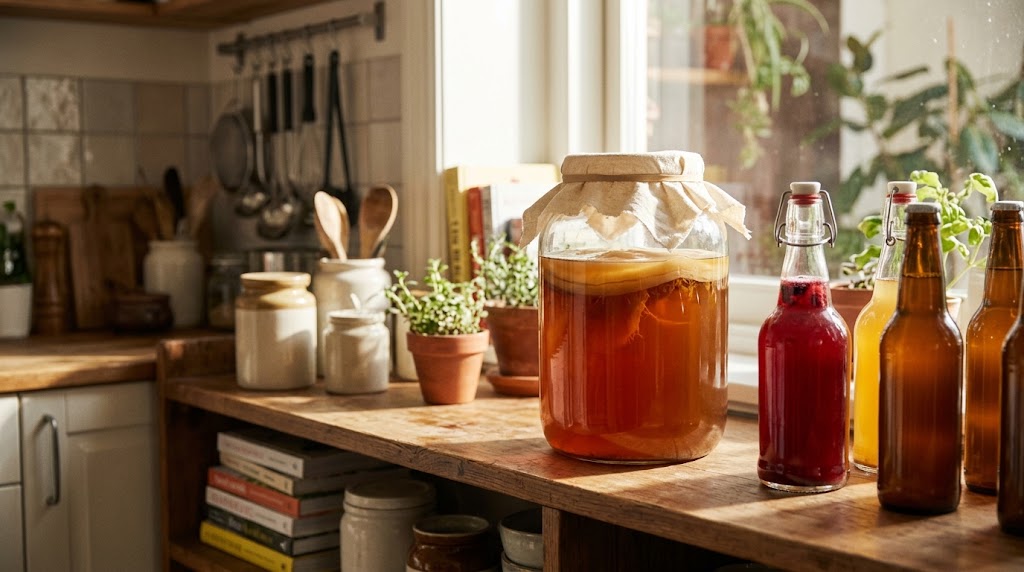
I remember the first kombucha batch that made sense to me. Not the first one I tried to make. The first one where I stopped treating the jar like a science experiment and started treating it like soup that needed a lid, a temperature, and time.
Kombucha's reputation for fussiness is mostly undeserved. Sweet tea, a living culture, a breathable cover, and somewhere reasonably warm: that is the core of it. The gear only has to keep that process clean, covered, and stable.
This post walks through how home kombucha brewing actually works, what a starter kit is buying you, and which extras matter on day one versus later. Product research and current options live in the kombucha brewing kits & supplies guide.
The four ingredients of a successful first brew
Strip the hobby to essentials and there are only four moving parts:
- Sweet tea: food for the culture
- A healthy SCOBY plus starter tea: the culture and its acidic backup
- A food-grade vessel with a breathable cover: gas exchange without fruit flies
- Stable warmth: roughly the mid-70s to low-80s °F is the commonly cited happy zone
Everything else (pH strips, heating mats, pretty bottles, continuous-brew spigots) is support equipment. Helpful, sometimes important, but not the brew itself.
When a batch goes wrong, it is usually one of those four: weak or contaminated starter, too cold, too much air exposure at the surface, or a sweetness/tea ratio that does not match the recipe you are following.
What a starter kit is actually buying
A complete kit is not magic. It is a bundle that removes decisions.
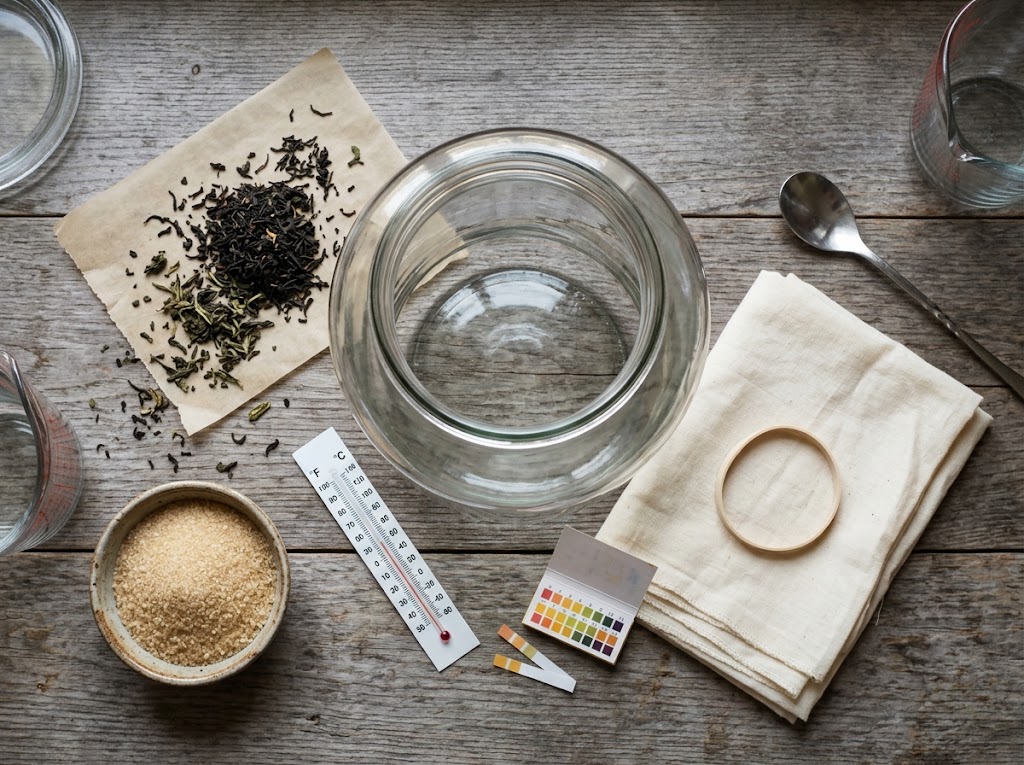
In product terms, kits researched for the site typically include some combination of:
- A live SCOBY with starter tea
- A one-gallon glass brew jar
- Organic tea and cane sugar for a first batch
- A cloth or paper cover and band
- An adhesive thermometer, pipette, and sometimes pH strips
- Printed instructions
The upside is obvious: one box, one start, no blank-catalog anxiety. The limits show up after week one. Many kits only include consumables for a single batch. Few include swing-top bottles for second fermentation. Almost none include a heat source.
Examples already shortlisted on Culture & Crumb include The Kombucha Shop Organic Starter Kit, Fermentaholics Deluxe (notable for including a heat mat), Craft A Brew's basic kit for a leaner start, and Bucha Brewers Deluxe, which is the uncommon kit that also includes bottling bottles. Full specs and honest downsides are in the guide.
Batch brewing, continuous brewing, and second fermentation
Primary fermentation (the "kombucha" stage)
In the brew jar, yeast and bacteria convert sugar in sweet tea into acids, mild effervescence, and that tart-sweet flavor people either love immediately or learn to love. Time and temperature drive the result more than gadgets do. Cooler kitchens slow everything down; warm ones move faster and can get vinegary sooner.
Second fermentation (the "fizzy flavor" stage)
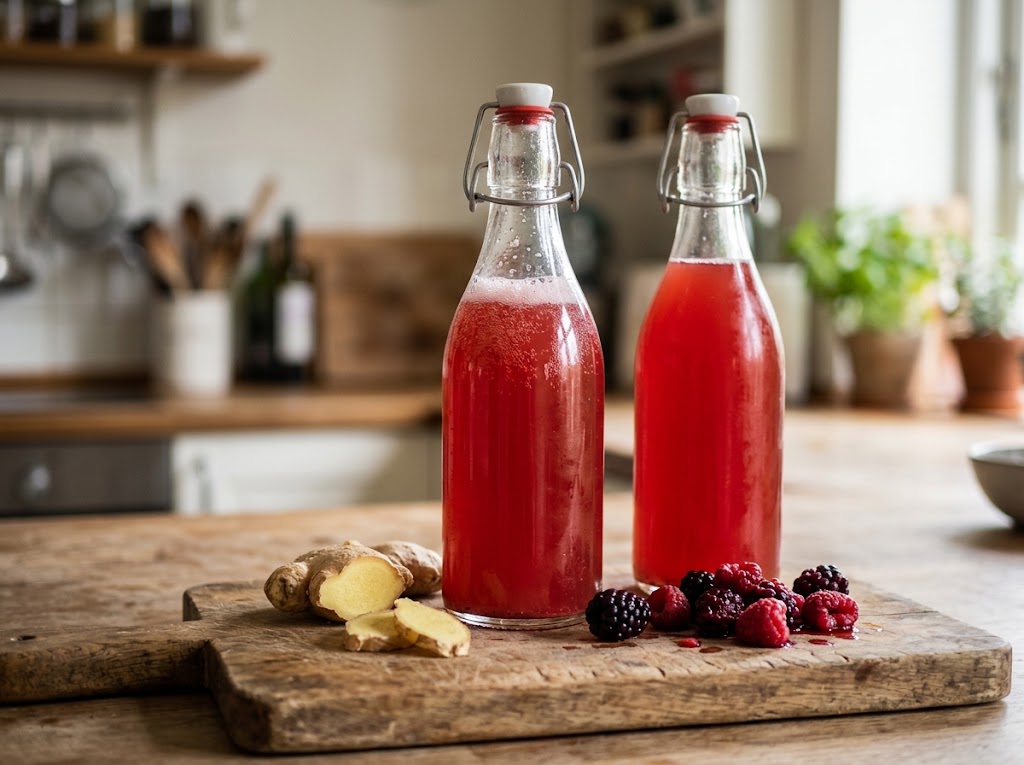
Once primary is done, you bottle the liquid with fruit, juice, or herbs in sealed bottles. Residual sugars ferment a bit more in a closed space, building carbonation. This is where bottle choice stops being optional: you want a seal that holds pressure.
Swing-top glass bottles are the community standard for a reason: reliable seal, easy to open and reseal, reusable. The 8-pack of 16 oz swing-tops featured in the guide is the usual recommendation for a full gallon of 2F. Safety note that belongs in every kitchen: do not overfill, do not ignore bottles that feel rock-hard, and open carefully. Pressurized glass is not the place for improvisation.
Continuous brewing
A spigoted jar lets you draw off finished kombucha and top up with fresh sweet tea. No empty "between batch" days. The Cultures for Health continuous brew jar already on the site is built for this pattern. The trade-off is process discipline: ratios, cleanliness at the spigot, and tasting more often because the brew never fully resets.
Temperature is the gear most people skip
If your kitchen sits below about 70°F for weeks at a time, fermentation crawls. Below the mid-60s, you are also raising the risk of mold before the brew acidifies enough to protect itself.
That is why a heating wrap shows up in more robust setups. The Hemlock Home Brewing kombucha heating wrap (adjustable settings, sized for gallon jars) is the example already researched for the guide. It is not a luxury item in a cold apartment; it is closer to insurance.
In a warm house that already holds mid-70s or higher, skip it. Buy bottles first.
Building a first-time setup without overbuying
Here is a kitchen-honest order of operations:
- Kit or SCOBY + jar so you can brew
- Bottles as soon as you know you want carbonation and flavor
- Heat source only if your space is cool
- pH strips if you want numbers; many brewers simply follow a tested recipe and taste
If you already own a clean gallon glass jar, a SCOBY-focused bundle (like Bucha Brewers' no-jar kit) can make more sense than buying a second jar you do not need.
For more on how we research and shortlist products, see our methodology.
Quick product links
- The Kombucha Shop Organic Starter Kit — complete first-batch kit
- Fermentaholics Deluxe Kit — includes heat mat
- Craft A Brew Basic Starter Kit — lean starter path
- Bucha Brewers Deluxe Kit with Bottles — brew + second fermentation
- Swing Top Glass Bottles 16 oz (8-Pack) — standard 2F bottles
- Hemlock Home Brewing Heating Wrap — for cool kitchens
Practical takeaways
- First brew = sweet tea + healthy culture + covered vessel + steady warmth
- Kits remove setup friction; they usually stop at batch one unless bottles are included
- Second fermentation is where bottle quality becomes safety and flavor quality
- Buy a heat wrap only if your kitchen is genuinely cool
- Match the system to your habit: batch if you like projects, continuous if you want a daily glass
FAQ
How do I know my SCOBY is okay to use?
Healthy cultures are typically tan/cream, smell vinegary rather than rotten, and come with acidic starter tea. Mold is dry and fuzzy, often blue-green or black on the surface. When in doubt, do not taste; start over.
Do I have to buy a kit?
No. A jar, a culture (or a bottle of strong unflavored raw kombucha as starter in some methods), tea, sugar, and a cloth cover can be assembled separately. Kits simply bundle the decision-making.
Why does everyone talk about pH?
Acidity is a major safety and consistency checkpoint. Many brewers use strips for reassurance early on; experienced brewers often rely on recipe timing and taste. If you want monitoring gear, start simple.
Can I reuse the SCOBY?
Yes. A culture can be maintained batch after batch when handled cleanly. That is part of why good starter tea and clean vessels matter more than fancy equipment on day one.
As an Amazon Associate, I earn from qualifying purchases. Product links on this page may earn Culture & Crumb a small commission at no extra cost to you.