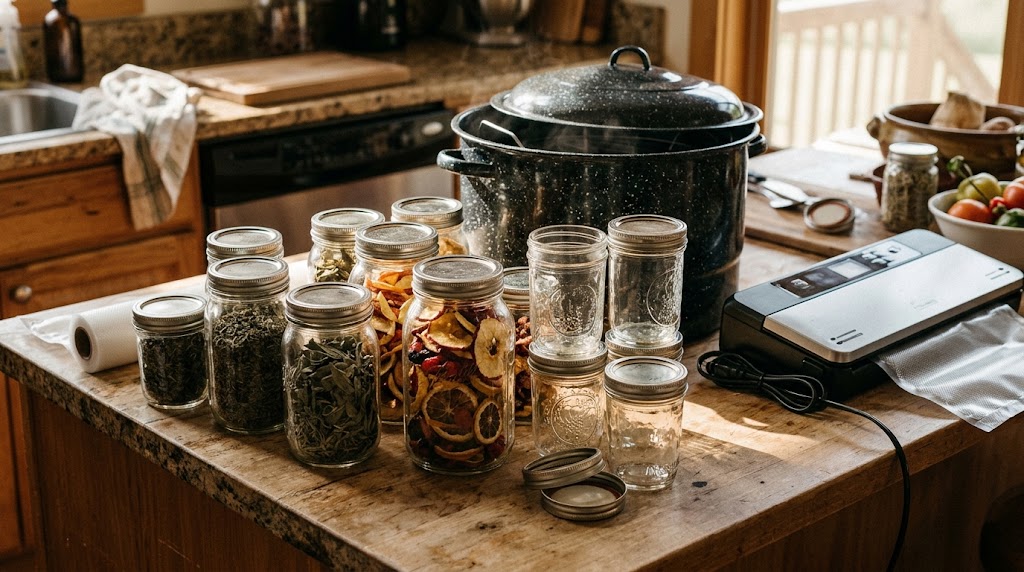
Every preserving method is really just an answer to one question: how do I keep this food safe and edible for longer than the fridge allows?
Dehydrating removes water. Canning heats food in sealed jars to kill spoilage organisms. Vacuum sealing removes air to slow oxidation and freezer burn. Each one is good at certain foods and awkward with others, and all three coexist happily in most serious home-preserving kitchens.
This post compares the three methods side by side: what each does well, where it falls short, and how to pick equipment that matches the food you actually preserve. Product details and current links live in the dehydrating, canning & preserving guide.
Dehydrating: shelf-stable and space-efficient
What it does
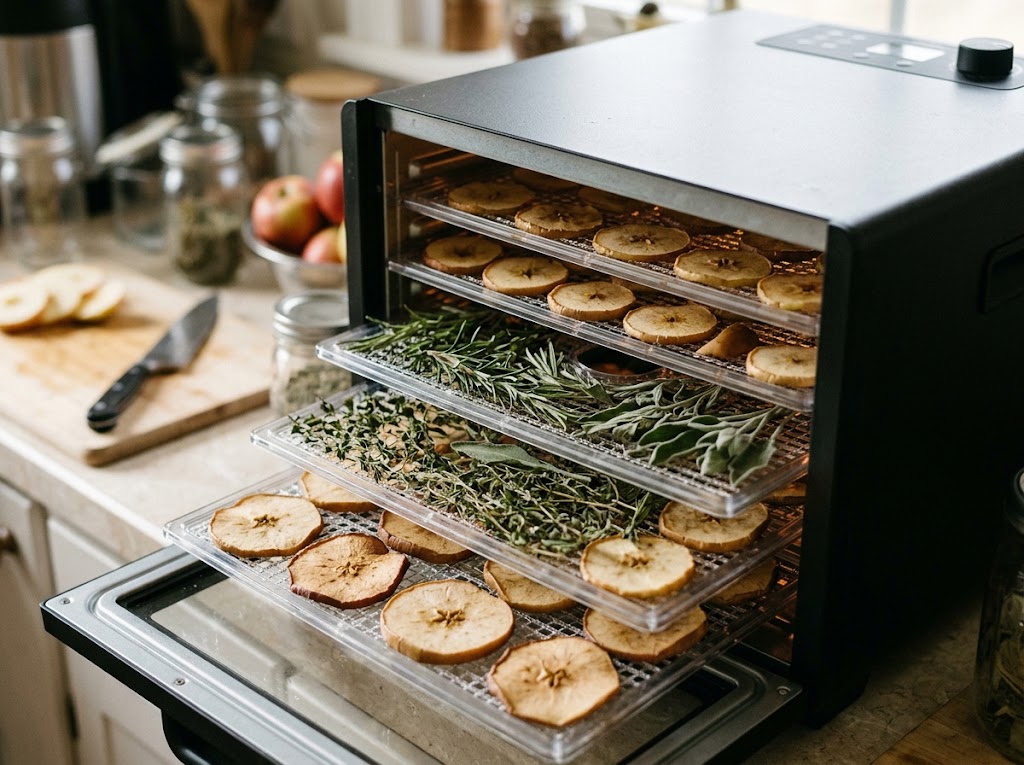
A food dehydrator circulates warm air (typically 95 to 160°F depending on the food) to draw moisture out of sliced fruit, vegetables, herbs, and meat (jerky). The result is lightweight, shelf-stable at room temperature when stored properly, and takes up a fraction of the original volume.
What it is good at
- Fruits for snacking (apple rings, banana chips, mango)
- Herbs (faster and more consistent than air drying)
- Jerky (with proper temperature and food-safety precautions)
- Vegetables for soups and backpacking meals
Where it struggles
- High-fat foods do not dehydrate well (fats go rancid)
- Dairy and eggs are generally not safe to dehydrate at home
- Rehydration changes texture: some foods come back mushy
Equipment
Dehydrators range from compact stackable units to full-size cabinet models. The COSORI Premium Food Dehydrator on the site is a stainless-steel unit with digital temperature control and timer, suitable for regular use. For smaller batches or getting started, the Nesco Snackmaster Pro is a proven stackable model that costs less and takes up less counter space.
Water-bath canning: the traditional jar method
What it does
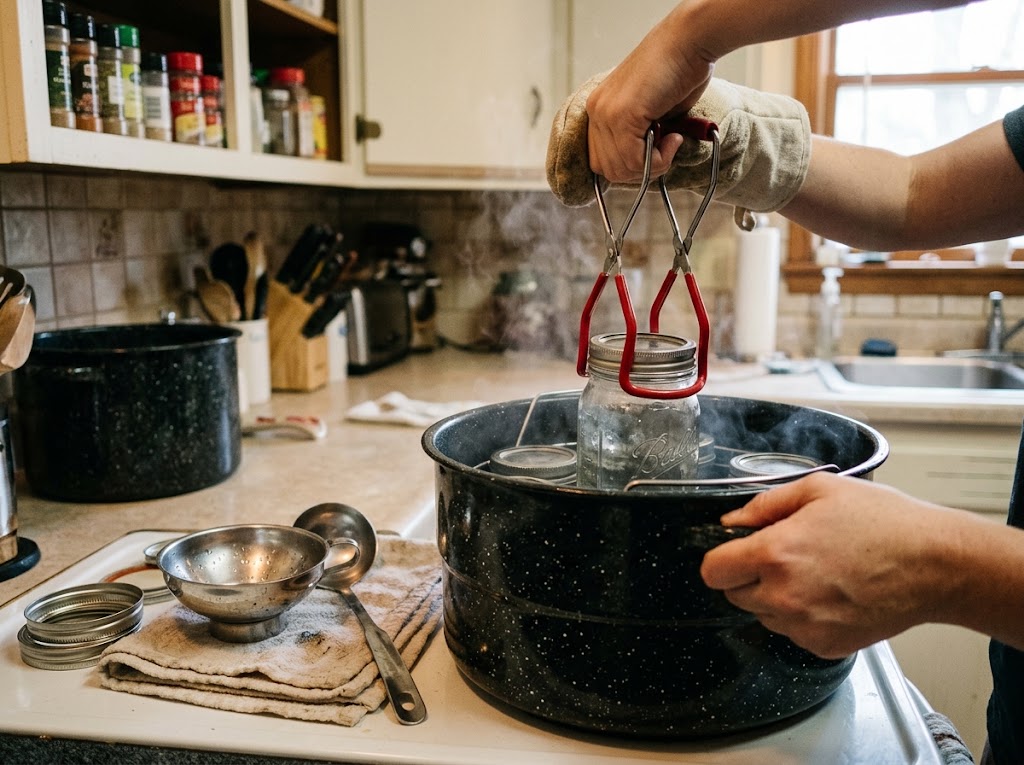
Water-bath canning submerges sealed jars in boiling water for a set time. The heat kills spoilage organisms and creates a vacuum seal as the jar cools. This method is safe for high-acid foods: fruits, pickles, jams, and tomatoes (with added acid).
What it is good at
- Jams, jellies, and fruit preserves
- Pickled vegetables (the acid is your friend)
- Tomato sauces and salsas (with proper acidity)
- Long shelf life at room temperature when done correctly
Where it struggles
- Low-acid foods (plain vegetables, meats, stocks) require pressure canning, which is a different method with different equipment and stricter safety rules
- Processing time and jar prep make it a batch commitment, not a quick task
- Failure points are invisible: a bad seal or insufficient processing time can allow botulism in low-acid foods. Follow tested recipes from trusted sources (USDA, Ball, NCHFP)
Equipment
A basic water-bath canning setup is remarkably simple: a large pot with a rack, jars, lids, and a few hand tools (jar lifter, funnel, bubble remover). The Ball Freshtech Electric Water Bath Canner is the modern convenience option: it heats, times, and holds temperature without monitoring a stovetop pot.
Mason jars are the universal standard. Buy regular-mouth for most preserves and wide-mouth for chunky salsas and whole fruit. Jars are reusable; flat lids with sealing compound are single-use (rings can be reused).
Vacuum sealing: the freezer's best friend
What it does
A vacuum sealer removes air from a bag or container and heat-seals it shut. By itself, vacuum sealing does not make food shelf-stable at room temperature. What it does is dramatically extend fridge and freezer life by removing the oxygen that causes freezer burn, oxidation, and flavor loss.
What it is good at
- Freezer storage: meat, fish, pre-portioned meals, and garden harvests last months longer
- Sous vide cooking (the bags are already sealed)
- Marinating (vacuum speeds up penetration)
- Keeping dehydrated foods fresher after drying
Where it struggles
- Liquids can get pulled into the sealer during vacuuming (freeze liquids first, or use the pulse/manual mode)
- Soft or crushable foods (berries, bread) get compressed. Pre-freeze them or use a container attachment
- Ongoing bag cost adds up; buying rolls and cutting custom sizes helps
Equipment
External clamp sealers are the home standard. The Anova Precision Vacuum Sealer Pro is already researched on the site: it handles wet foods better than most entry models, seals reliably, and works with generic bag rolls (not just branded ones). For a budget start, the NutriChef Vacuum Sealer does the basic job at a lower price point, with the trade-off of a weaker pump and less control over wet sealing.
Side-by-side comparison
| Dehydrating | Water-Bath Canning | Vacuum Sealing | |
|---|---|---|---|
| Shelf life | Months to a year (room temp) | 1 to 2+ years (room temp) | 2 to 3 years frozen; days to weeks in fridge |
| Best for | Fruit, herbs, jerky, veg | Jams, pickles, high-acid foods | Meat, fish, pre-portioned meals, garden harvests |
| Not ideal for | Fats, dairy, eggs | Low-acid foods (needs pressure canner) | Liquids (without freezing first), soft foods |
| Ongoing cost | Electricity only | Lids (jars reusable) | Bags or rolls |
| Counter space | Moderate to large | Stovetop or electric unit | Small (most store in a drawer) |
| Learning curve | Low | Medium (safety rules matter) | Low |
Combining methods
The real power shows up when methods overlap:
- Dehydrate then vacuum seal: Dried fruit and jerky stored in vacuum bags last significantly longer than in zip-lock bags or jars, because you are removing both moisture and air
- Can then dehydrate the rejects: Slightly overripe tomatoes that are not ideal for canning can go into the dehydrator instead of the compost
- Vacuum seal for the freezer, can for the pantry: Meat and fish go in bags; pickles and jams go in jars. Each method covers what the other cannot
Picking a starting point
If you mostly want to preserve garden fruit and make snacks, a dehydrator makes the most immediate sense. If you make jams, pickles, or sauces, water-bath canning is your tool. If you buy meat in bulk, freeze garden harvests, or cook sous vide, start with a vacuum sealer.
Most home preservers eventually use at least two of the three. The order depends entirely on what you eat and what you grow.
Full product research, specifications, and current Amazon links for all equipment mentioned here are in the dehydrating, canning & preserving guide. For more on how we research and shortlist products, see our methodology.
Quick product links
- COSORI Premium Food Dehydrator — digital temp, stainless steel
- Nesco Snackmaster Pro — compact stackable dehydrator
- Ball Freshtech Electric Water Bath Canner — hands-off canning
- Ball Mason Jars (Regular Mouth) — the canning standard
- Anova Precision Vacuum Sealer Pro — handles wet foods well
- NutriChef Vacuum Sealer — budget-friendly starter
Practical takeaways
- Dehydrating, canning, and vacuum sealing solve different problems: there is no single best method
- Dehydrating = lightweight, room-temp storage for fruit, herbs, and jerky
- Canning = long shelf life for high-acid foods (jams, pickles, tomatoes)
- Vacuum sealing = extended freezer life and sous vide readiness
- Combining methods (dehydrate + vacuum seal, for example) gives the longest storage
- Start with whatever method matches the food you already have too much of
FAQ
Is vacuum-sealed food shelf-stable?
No. Vacuum sealing alone does not kill bacteria. It slows spoilage by removing oxygen, but the food still needs refrigeration or freezing. The exception is commercially processed shelf-stable pouches, which use a completely different process.
Can I use a regular pot for water-bath canning?
Technically yes, if it is tall enough to cover the jars by 1 to 2 inches of water and you add a rack to keep jars off the direct bottom heat. An electric canner or a proper canning pot with a fitted rack is safer and more consistent.
How long does dehydrated food last?
It depends on the food and storage conditions. Well-dried fruit in an airtight container lasts 6 to 12 months. Jerky is best within 1 to 2 months unless vacuum-sealed (then longer). Herbs can last a year or more.
What about pressure canning?
Pressure canning is needed for low-acid foods (vegetables, meat, stock) and uses a different piece of equipment (a pressure canner, not a pressure cooker). It is a separate discipline from water-bath canning with stricter safety requirements. If your preserving ambitions go beyond high-acid foods, research pressure canning separately.
As an Amazon Associate, I earn from qualifying purchases. Product links on this page may earn Culture & Crumb a small commission at no extra cost to you.