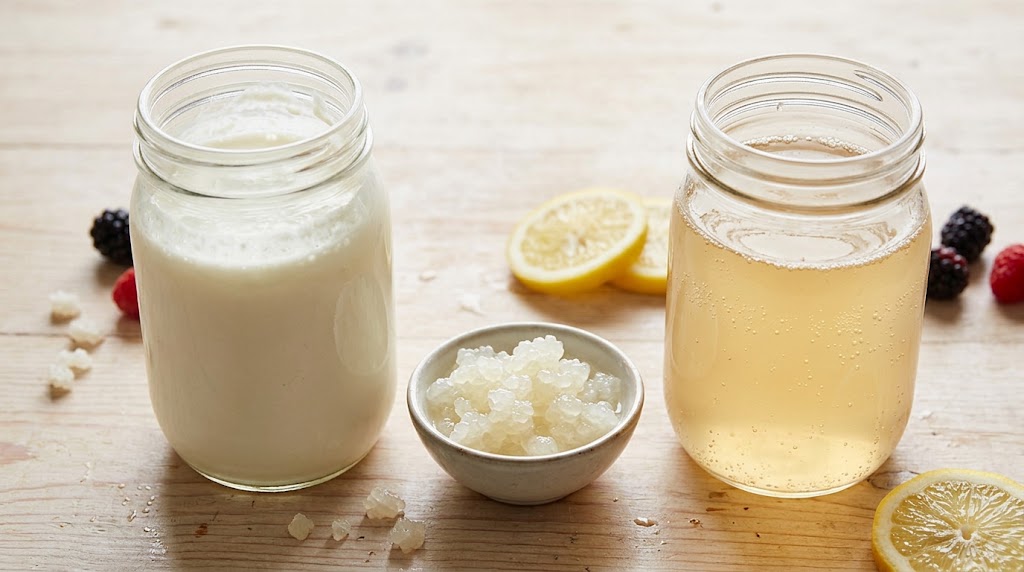
Kefir is one of the oldest fermented foods, and one of the most confusing to research because the word refers to two fundamentally different products made with two different cultures. Milk kefir is a tangy, yogurt-like fermented dairy drink. Water kefir is a lightly fizzy, slightly sweet fermented water or juice drink. The grains look similar (translucent, gelatinous clusters), but they contain different microbial communities, feed on different substrates, and produce drinks with very different flavour profiles.
Both are simple to make at home with minimal equipment. The question for most people is which one to start with, and whether the gear for one works for the other.
Milk kefir: the basics
Milk kefir grains are a symbiotic culture of bacteria and yeasts (a SCOBY, similar in concept to a kombucha culture but different in composition). You add them to milk, leave the jar at room temperature for 12 to 48 hours, strain out the grains, and drink the fermented milk. The grains go into the next batch of fresh milk and the cycle repeats.
The resulting drink is thicker than milk, tangier than yogurt, and slightly effervescent. It contains a broader range of probiotic strains than yogurt (typically 30 to 50 strains versus yogurt's 2 to 7). The flavour is distinctive: sour, slightly yeasty, and creamy.
Water kefir: the basics
Water kefir grains look similar to milk kefir grains but are a different culture. They ferment sugar water (or coconut water, or fruit juice) rather than dairy. The process is similar: dissolve sugar in water, add the grains, wait 24 to 48 hours, strain, and optionally do a second ferment with fruit or juice for flavour and carbonation.
The resulting drink is lighter, less tangy, and naturally fizzy. It is a good alternative for people who avoid dairy, and it serves as a base for flavoured probiotic sodas. The probiotic profile is different from milk kefir but still contains beneficial bacteria and yeasts.
Equipment for milk kefir
You need very little to start making milk kefir:
- A glass jar (quart or half-gallon): Wide-mouth for easy straining. Mason jars work perfectly.
- A fine-mesh plastic or stainless steel strainer: To separate the grains from the finished kefir. Avoid reactive metals (aluminium, copper). The Kefirko kefir maker includes a built-in strainer and measuring system if you want an all-in-one solution.
- A cloth cover or coffee filter: To cover the jar during fermentation. The culture needs air exchange but not insects or dust. A coffee filter secured with a rubber band is the simplest option.
- A wooden or plastic spoon: For stirring. Some kefir makers avoid metal contact with the grains, though stainless steel is generally considered safe.
The Cultures for Health milk kefir grains are a widely used starter. They ship dehydrated and need a few batches to fully activate (the first two or three batches may not taste right; discard them and keep feeding the grains fresh milk until the flavour stabilises).
Equipment for water kefir
Water kefir equipment overlaps heavily with milk kefir, with a few differences:
- A glass jar (quart or half-gallon): Same as milk kefir.
- A fine-mesh plastic strainer: Same function. Stainless steel works; avoid aluminium.
- Flip-top (Grolsch-style) bottles: For the second ferment where carbonation builds. This is the key difference from milk kefir, which is not typically carbonated. The Chef's Star glass bottles with flip-top caps handle the pressure of a fermented second ferment and look good in the fridge.
- Organic cane sugar: Water kefir grains feed on sugar. White sugar works but organic cane sugar (less refined, more minerals) tends to produce healthier grains over time. About 60g of sugar per litre of water is the standard ratio.
The Cultures for Health water kefir grains are the water kefir equivalent of their milk kefir starter. Same activation process: a few initial batches to wake up the grains.
Which should you start with?
The decision usually comes down to diet and taste preference:
- Choose milk kefir if: You drink milk regularly, you want a thick probiotic drink similar to yogurt, and you are comfortable with a tangy, creamy flavour.
- Choose water kefir if: You avoid dairy, you want a lighter fizzy drink, you like flavouring with fruit and juice, or you want to make probiotic soda.
Both are equally simple to maintain. Milk kefir requires buying milk regularly. Water kefir requires sugar and occasional mineral supplements (a pinch of mineral-rich salt or a few drops of liquid minerals every few batches helps the grains stay healthy in the low-mineral environment of sugar water).
Can you keep both cultures?
Yes, and many fermentation enthusiasts do. The cultures are different organisms and do not cross-contaminate. You can maintain milk kefir grains in one jar and water kefir grains in another without any issues. The equipment is interchangeable as long as you clean between uses.
If one culture starts producing more grains than you need (both types grow over time), share them. Kefir grains are one of the few food cultures that people routinely give away. Local fermentation groups, online forums, and neighbourhood sharing are all common distribution methods.
FAQ
Can I use milk kefir grains to make water kefir?
Technically, milk kefir grains can survive briefly in sugar water, but they do not thrive. They are adapted to lactose, not sucrose. You may get a fermented drink, but the grains will weaken and eventually die without dairy. Use the correct grain type for each medium.
How long do kefir grains last?
Indefinitely, in theory. Kefir grains are living cultures that grow and reproduce. With regular feeding (fresh milk or sugar water every 24 to 48 hours), they last for years. If you need to take a break, place the grains in fresh milk or sugar water in the fridge. They slow down and can survive a week or two without feeding. For longer storage, dehydrate them.
Is kefir safe for lactose-intolerant people?
Milk kefir is often tolerated better than milk because the fermentation process breaks down a significant portion of the lactose. It is not lactose-free, but many lactose-intolerant people find they can drink kefir without symptoms. Water kefir is naturally dairy-free and has no lactose.
As an Amazon Associate, I earn from qualifying purchases. Product links on this page may earn Culture & Crumb a small commission at no extra cost to you.