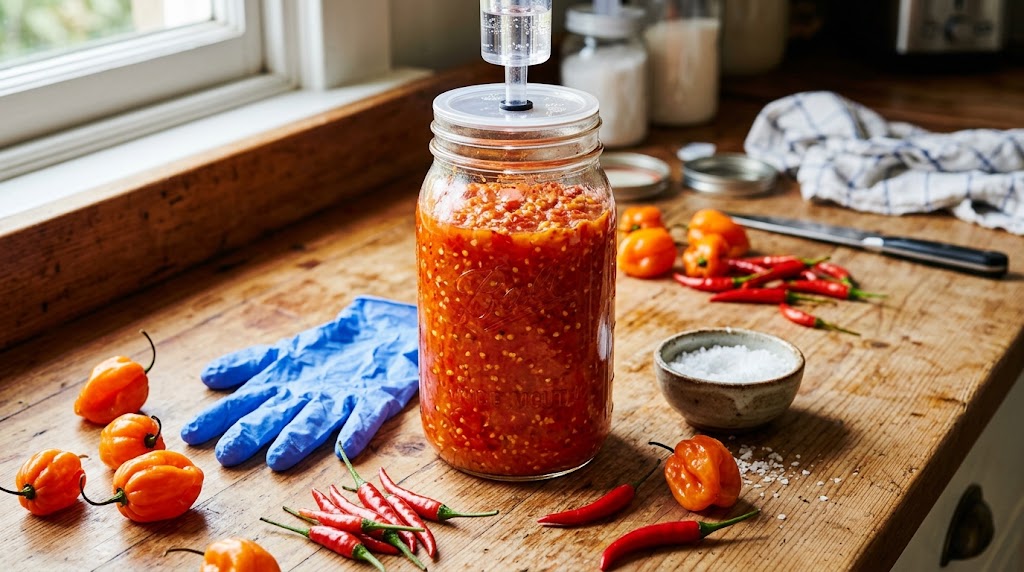
Store-bought hot sauce is cooked. Fermented hot sauce is alive, or at least it was during the weeks when lactobacillus bacteria converted the sugars in fresh peppers into lactic acid, carbon dioxide, and a complexity of flavour that vinegar-based sauces cannot replicate. The tang is different. The heat is rounder. And the process, once you have the equipment, is barely more work than chopping peppers and waiting.
The equipment list for hot sauce fermentation is short and inexpensive. Most of it overlaps with general vegetable fermentation gear. A few items are specific to working with peppers and bottling the finished sauce.
The fermentation vessel
A wide-mouth mason jar is the simplest vessel for hot sauce fermentation. Quart jars work for small batches (500g to 800g of peppers). Half-gallon jars suit larger batches. The peppers go in as a mash (blended or chopped), mixed with salt, and the jar gets an airlock lid to manage gas release.
For a first batch, a quart jar is the right scale. It is enough sauce to fill several bottles, small enough that a failed batch does not waste much, and easy to monitor. The Masontops Pickle Pipes airlock lids fit wide-mouth jars and handle the CO2 output of a pepper ferment without any babysitting.
Gloves: non-negotiable for hot peppers
This is the one piece of equipment specific to hot sauce that you cannot skip. Capsaicin (the compound that makes peppers hot) binds to skin and does not wash off with soap and water. Chopping habaneros bare-handed means burning hands for hours, sometimes overnight. Touching your eyes after handling peppers without gloves is a mistake you make exactly once.
Nitrile gloves are the standard. Latex works too but some people have allergies. Buy a box of disposable nitrile gloves from any pharmacy or Amazon. They cost almost nothing and save genuine misery.
A food processor or blender
Hot sauce starts as a mash. Some recipes use chopped peppers, but most call for blending the peppers with salt (and sometimes garlic, onions, or fruit) into a thick paste before fermentation, then blending again with vinegar after fermentation to create the final sauce consistency.
You do not need a high-end blender for this. Any food processor or blender that can handle chunky vegetables works. For the final blending, where you want a smooth sauce, a standard blender at high speed for 60 to 90 seconds produces a pourable consistency. A NutriBullet or similar personal blender handles small batch hot sauce well and is easier to clean than a full-size blender.
Fermentation weights
Even with a mash (as opposed to whole vegetables), keeping everything submerged below the brine is important. Pepper mash tends to float and form a cap on the surface where mold can establish. A fermentation weight pushes the mash below the liquid line.
For hot sauce specifically, glass weights sized for wide-mouth jars work well. The mash is denser than whole vegetables, so a lighter weight often suffices. Some hot sauce makers skip the weight and simply press the mash down daily with a clean spoon, but this introduces air contact and requires discipline.
Bottles for the finished sauce
Once fermentation is complete (typically 5 to 14 days for a standard hot sauce, longer for more complex flavour development), you blend the mash with vinegar and bottle it. The bottle choice affects both shelf life and usability.
The 5 oz woozy bottles are the classic hot sauce bottle shape, the same silhouette as Tabasco and most commercial hot sauces. They come with dripper inserts that control the pour. A dozen bottles with caps and shrink bands costs very little and makes your homemade sauce look like something you would sell at a farmers market.
A fine-mesh strainer (optional but useful)
After blending, some sauces benefit from straining to remove seeds and skin fragments. This produces a smoother, more pourable sauce similar to commercial products. Others prefer the texture and heat that seeds add (much of a pepper's capsaicin is concentrated in the placental tissue and seeds).
If you choose to strain, a fine-mesh sieve and a spoon to press the mash through it are all you need. For larger batches, a food mill does the job faster and with less effort.
The process in brief
- Chop or blend peppers with garlic, onion, or fruit if desired
- Mix with 2% to 3% salt by weight
- Pack into a jar, press out air, add a fermentation weight
- Seal with an airlock lid
- Ferment at room temperature (18 to 24 degrees Celsius) for 5 to 14 days
- Taste periodically. Longer fermentation means more tang and less raw heat
- Blend with vinegar to taste (start with a small amount and add gradually)
- Bottle and refrigerate. Fermented hot sauce keeps for months in the fridge
FAQ
How long should I ferment hot sauce?
Five days minimum for a noticeable tang. Seven to fourteen days for a well-developed flavour. Some makers ferment for months for a deeply complex sauce. Taste as you go and bottle when it hits the flavour profile you want.
Can I use dried peppers for fermented hot sauce?
Dried peppers have less moisture and fewer available sugars for fermentation. You can rehydrate them and ferment, but the results are different from fresh pepper fermentation. For a first batch, fresh peppers give more predictable results.
Why did my hot sauce separate in the bottle?
Separation is normal. The solids settle and the liquid rises. Shake before using. Straining and blending more thoroughly reduces separation but does not eliminate it entirely in a preservative-free sauce.
As an Amazon Associate, I earn from qualifying purchases. Product links on this page may earn Culture & Crumb a small commission at no extra cost to you.